Private Pilot.
The license that opens the sky.
The Private Pilot Certificate (PPL) is the cornerstone of recreational and personal aviation. Carry passengers. Fly cross-country. Operate at virtually any airport in the country.
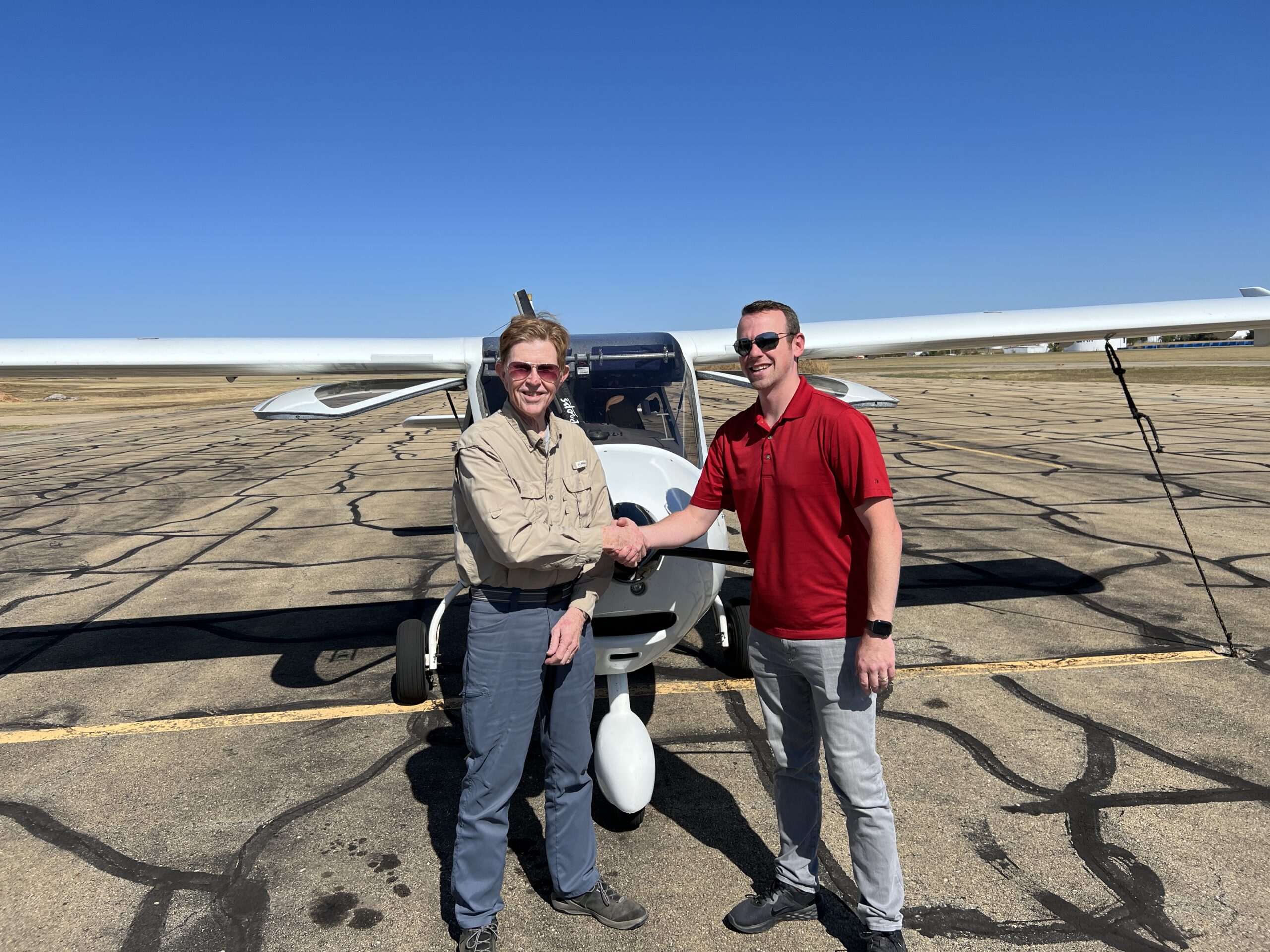
What it is. What you get.
The Private Pilot License is the most versatile certificate in general aviation. Unlike Sport Pilot, Private Pilots can carry multiple passengers, fly at night with additional training, and operate larger aircraft as they earn add-on ratings.
Training requires a minimum of 40 flight hours, though the national average sits closer to 65-70. We don't push students through at any pre-set pace — your training timeline depends on your schedule, your aptitude, and your goals.
What you get with a Private Pilot Certificate is real freedom of movement. Fly your family to a beach weekend. Visit family across state lines without TSA lines. Build hours toward Instrument and Commercial.
Six modules.
One certificate.
Pre-Solo
Aircraft handling, takeoff, landing, slow flight, stalls, emergency procedures.
Solo & Pattern Work
Repeated pattern work building landing precision.
Cross-Country & Navigation
Plan and execute solo cross-country flights.
Night Operations
FAA-required night flight training including 10 takeoffs and landings to full stop.
FAA Knowledge Test
60-question FAA written.
Checkride Preparation
Mock orals and mock flight tests with our most experienced CFIs.
One program. Everything in it.
Adventure Air's pricing covers the full training program — flight time, ground instruction, knowledge-test prep, and checkride coordination — without surprise upcharges or hidden membership fees.
- FAA-certified flight instruction in Flight Design CTLS
- Comprehensive ground school program
- FAA Knowledge Test prep with adaptive practice exams
- Night training endorsement included
- Solo cross-country planning and supervision
- Pre-flight and post-flight briefings every lesson
- Checkride coordination and DPE scheduling
What you need to qualify.
The license that changes everything.
Most of our PPL students start with a discovery flight. Book yours — see what an hour of training actually looks like.